Showing posts with label history. Show all posts

Monday, June 21, 2010

Sachsenhausen

Photobucket
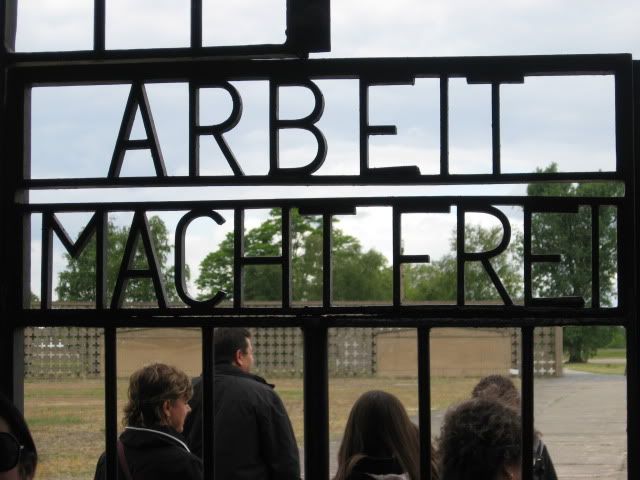
Sachsenhausen Tower A, entrance to the camp

On Sunday, Jeff and I toured Sachsenhausen, a Nazi concentration camp about 20 miles from Berlin.

There is so much and yet so little that I can say about the experience. The stories, images, artifacts, and facilities themselves contain such a huge burden of history. But you know standing there before all those facts and pieces that there is no way to grasp the magnitude of it. I could write pages and pages on what we learned yesterday and it would still never capture the whole.

Sachsenhausen is not as well known as other concentration camps such as Auschwitz or Treblinka, two of the six infamous extermination centers in eastern Europe. But there are two horrible facts that make it significant nonetheless. Firstly, Sachsenhausen was designed as the model facility by the Nazis. It was built from the ground up for its terrible purposes and was held as the standard by which others operated. While the world's attention was on the 1936 Olympics in Berlin, only a few miles north slave labor was being used to construct this “thoroughly modern concentration camp”, as Heinrich Himmler proudly called it. To this end, many of the up and coming SS officials trained here and then went on to oversee other concentration and extermination camps.

Secondly, the headquarters and top officials in charge of administering all concentration camps were located just outside the gates of Sachsenhausen. From here, decisions such as food rations, medical experiments, torture practices, extermination methods, and all other aspects of camp life and death were determined for the whole system of around 20 main concentration camps and many hundreds of smaller satellite camps.

Though it was built to house around 10,000 prisoners, by 1944 it held almost 70,000. In total, over 200,000 men, women, and children were prisoners in Sachsenhausen at one time or another during its nine year span under Nazi use; 30,000 of them are estimated to have been killed or died. Terribly, the compound was used as a Soviet special camp for prisoners of war and enemies of the state for another four years after WWII, resulting in at least another 12,000 deaths from illness, malnutrition, and epidemics.
Photobucket

This is only the dry quantitative information; I can't begin to describe the hanging gallows, torture devices, gas chambers, crematorium, execution trenches, punitive and forced labor assignments, and the multitude of other horrors we saw and learned about. I can only say that if you ever have the chance to visit such a site, I urge you to do it.

Monday, May 31, 2010

Heart of Berlin

Another big day on Sunday! We took the S Bahn, U Bahn, and bus and finally arrived at the German Historical Museum. It's a huge building loaded with information and artifacts of significant events in the German region since 100 BC! That means there was a lot to cover. We only saw about half the building, up to the 1900's. That might sound like there isn't much left, but of course Germany has had a lot happen in the past century, so we can't wait to return for the remainder.
Photobucket
Panel showing the heraldic shield of Charles V,
Emperor of the Holy Roman Empire of the German Nation

Photobucket
Suits of armor worn by the knights
Photobucket
Mask worn by doctors during the Bubonic Plague

We left the museum by mid-afternoon and walked up the famous Under den Linden street to the Reichstag, the seat of the German government. Jeff had prearranged for a guided tour in English, so we were able to bypass the lengthy lines and go right in. After a security check, we joined our group and enjoyed a two hour journey through the Reichstag and the glass dome on top.
Photobucket
The Reichstag is the equivalent of the US Capitol Building. It was completed in 1894, but due to the famous fire of 1933 and damage during WWII, it was basically unused until after reunification. Restoration was completed in 1999. Photobucket
Russian graffiti on the interior walls from the fall of Berlin to the Soviets
during WWII. The architect responsible for reconstruction of the Reichstag
wanted to preserve all the signs of history, so the graffiti remains, as well as
bullet holes on the exterior.

Photobucket
The Plenary Chamber where the Bundestag meets
Photobucket
Another view of the Plenary from the visitors gallery. The German
constitution dictates that the public always be allowed access and viewing.

Photobucket
The French art project, one of several pieces contributed by members of the
Allied Nations. The Jewish artist replicated small post boxes and added a name plate for each elected member of the Bundestag from 1894 until 1999 (including Adolf Hitler). The black square in the middle is representative of the Nazi reign when all other parties were forced to disband and democracy was suspended.

Photobucket
In the Plenary under the dome, which functions as a cooling system and air exchanger
Photobucket
View of Berlin from the top of the Reichstag

Following the Reichstag, we had dinner at a nice outdoor cafe and then consulted our S Bahn map again. We had tickets to Carmina Burana, so we found our way to the Konzerthaus, a lovely old building at Gendarmenmarkt. Jeff and I have sung Carmina before in the Arkansas Master Chorale, but we have never heard it as passive audience members. It was very enjoyable, certainly the more-so because of our familiarity with it. We both loved the soprano soloist, and the tenor was very engaging (especially in the drinking song, which he essentially acted out ;-). I also enjoyed the countertenor, but that's not really Jeff's cup of tea!
Photobucket
Inside the Konzerthaus, seated on the main floor

Monday, May 17, 2010

Berlin Walking Tour

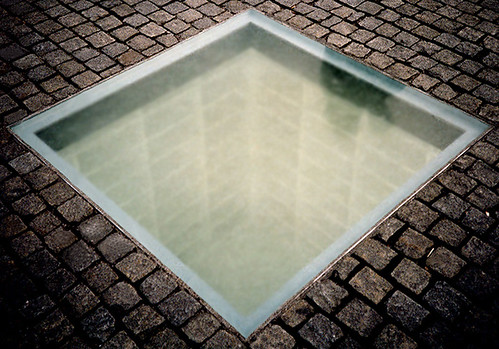
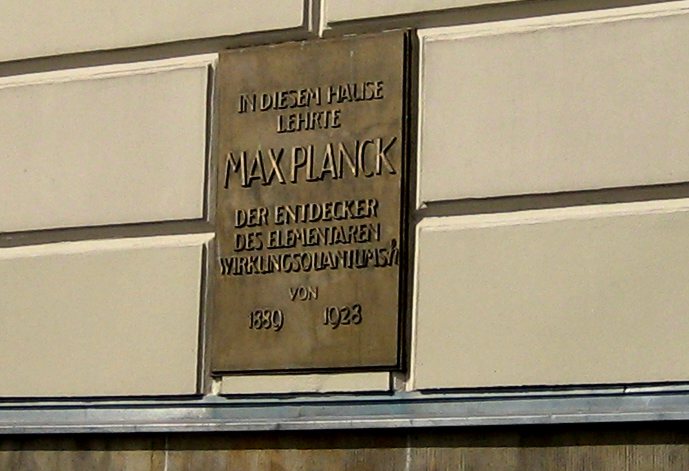
On Sunday, we took our first proper walking tour of Berlin. We had a three hour guided journey through many of the most significant places in Berlin, starting at the Brandenburg Gate and ending at Museum Island and the Soviet-era radio tower in Alexanderplatz. We saw too many significant places to name them all, but some of the most interesting to us were Checkpoint Charlie (gate C in the Berlin Wall), the twin churches facing Gendarmenmarkt square (one for the French Huguenots recruited in the 1700's and a matching one for the Germans), Humboldt University and the square where 20,000 “un-German” books (including those by authors Helen Keller and Albert Einstein) were burned during the 1933 Nazi takeover, and the campus building where Max Plank taught physics for over 30 years.
The Cold War microcosm; here communism and democracy
came face to face on a daily basis for several decades.


The concert hall and the French Cathedral (the identical German cathedral
faces in as a mirror image, giving the square almost perfect symmetry).

A professional photo of the memorial in the square where the book burning
occurred. It is a glass window showing empty underground bookshelves,
representative of the 20,000 volumes burned on that one occasion alone.


A haunting plague nearby carries the German inscription
penned over 100 years before the Nazis came to power:

"When one begins with burning books, one will end with burning men."

The Max Planck plaque

Friday, May 14, 2010

Potsdam

There are many holidays in May here, so we are the beneficiaries of the German system. Thursday was a holiday, so Friday is a “bridge day”, also given as a day off. Neither Jeff nor I had class or work, and so began a long four day weekend. Jeff's host at Bam, Pedro, and his wife Chris, offered to take us to Potsdam to tour some of the sites. Potsdam was the heart of the Prussian empire and there are castles galore there. It is currently the capital of Brandenburg, so it has lots going on, even though it is much smaller than Berlin.

We toured the Neues Palais, built by Frederick the II (also known as Frederick the Great) in the 1760's. It is quite a sight; and remember, it's only one of several within a few miles!

The Neu Palais


How's this for a kitchen?! The service buildings for the castle are across the courtyard so as to limit unpleasant sights and sounds, as well as to prevent fire.


I'd love to waltz in this dance hall!


The Groto room is completely covered with shells and decorative minerals.

After a lively day of coffee drinking, sight-seeing, walking, lunching, and conversing with our hosts, we return home by 5:30. Since it was still early, we decided to squeeze in some opera, as we had seen a poster the day before advertizing La Traviata that evening. We had very little info as to time or place, but our landlady did a quick search and found which opera house (Berlin has three!) and directions. We hopped on the train, commuted to downtown, and found the Komische Oper just in time to stand in line and buy tickets minutes before the lights went down. The opera was performed with modern costumes and sets and was sung in German. There were little electronic translation screens on the backs of the seats, and after the intermission we moved to some seats that had working screens and were able to enjoy the performance much more!

The Komische Oper house (we sat directly above the sconce seen
in the top left corner of the photograph, in the second balcony)

Sunday, May 9, 2010

Afternoon in Berlin

Sunday was a good day to sleep in and rest up from all our travels (international and domestic). We spend the afternoon in Berlin again and went down to the Brandenburger Tor (Brandenburg Gate to us Americans). Given that is it such a tourist attraction, we heard much spoken English, both from tour guides and travelers. It was nice to hear familiar sounds without straining to catch the meaning! I can start to see why immigrants to a foreign country might really stick together and form cultural neighborhoods and districts. There is something instantly bonding about a shared nationality when you are the alien.

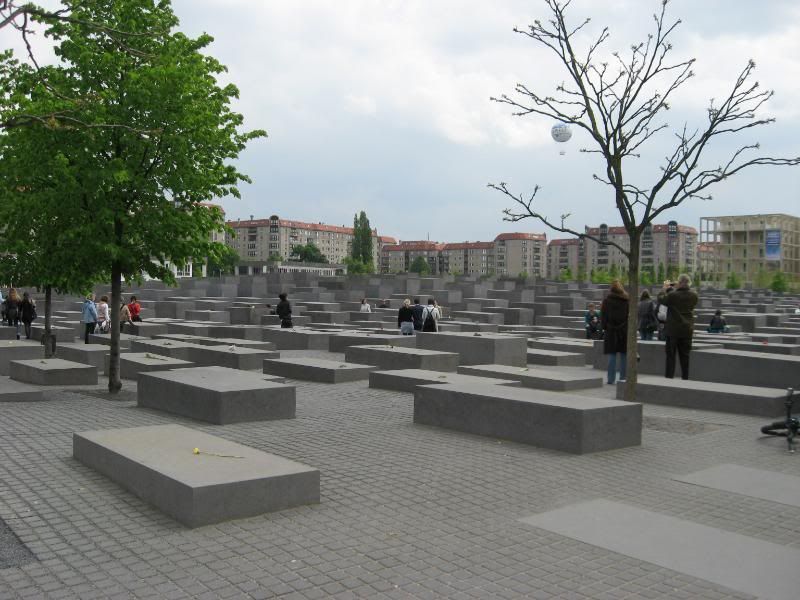
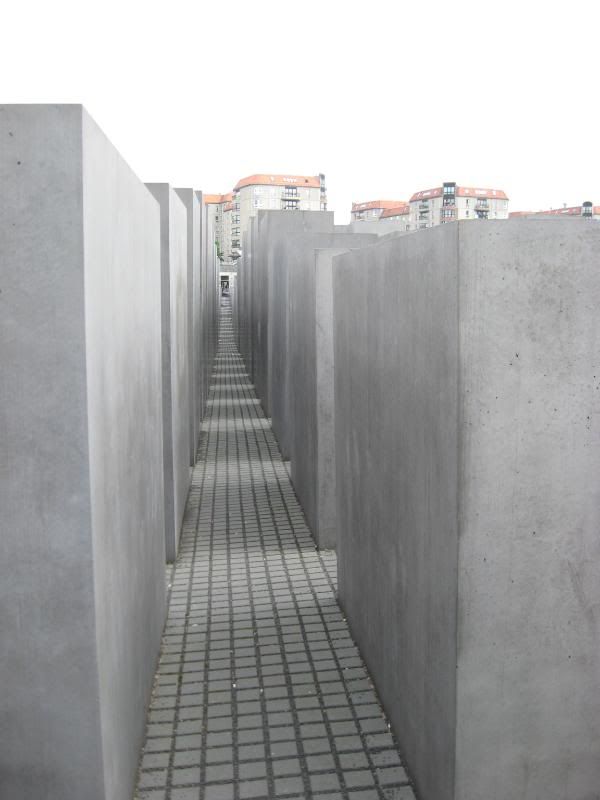
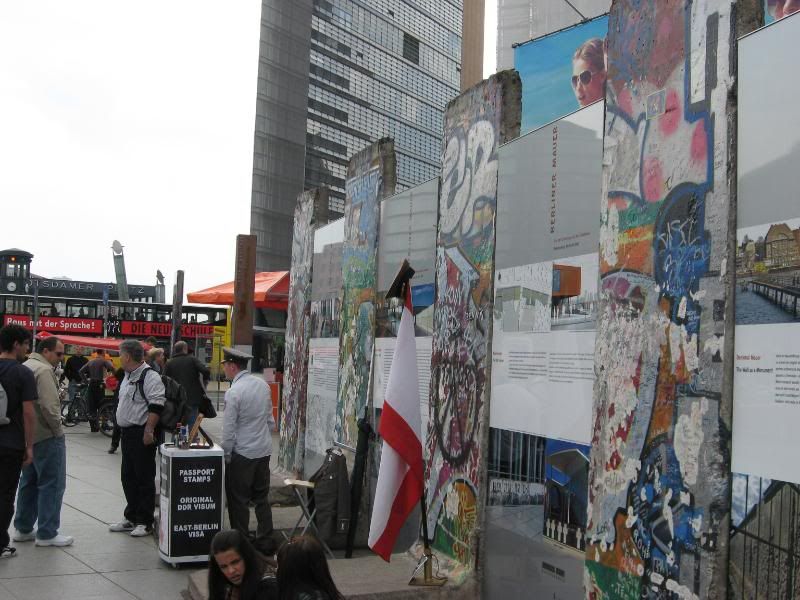
We viewed the Memorial to the Murdered Jews of Europe and the remnants of the Berlin Wall, and also went to the art museum for a brand new Frida Kahlo exhibit. This is apparently the largest collection of and about her ever put together and it just opened a little over a week ago, so we stood in line for probably an hour before getting into the gallery. People of Berlin must really appreciate fine art and culture!


Tuesday, July 14, 2009

Eighth Anniversary!


Well, I've been absent from the computer again, but for a very good reason. Last Wednesday (July 8) was our 8th anniversary, but since we had just been camping and Jeff was leaving to present a paper at a week long conference in Ottawa soon after, I didn't expect anything special. But Tuesday evening, Jeff told me I needed to start packing! He gave me guidance on what to pack but no other details. Wednesday morning, he drove me to the shoals area of Alabama, a beautiful location about an hour west of us right along the river. There are four small cities all grouped together and so many things to see and do. We stayed at the Marriott Golf and Spa resort and had dinner at their revolving restaurant up in the tower; who knew the only such rotating dining experience in Alabama was in a little town overlooking the Tennessee River?


We spent a leisure Wednesday afternoon strolling through the old downtown, browsing antique stores, driving through historic neighborhoods, and seeing the only Frank Lloyd Wright house in Alabama (another one and only for Alabama).


But Thursday was my favorite. Jeff took me to Helen Keller's birthplace in Tuscumbia, one of the four cities in the shoals. The original house, cottage/school room, and water pump are right there on 10 remaining acres of the former plantation. I've always loved the history of Helen Keller; she was such as incredible woman and an inspiration, especially to those with disabilities. To be deaf and blind in rural Alabama in the 1800's would be a tremendous obstacle for anyone, but she used the opportunity to grow personally and teach and enrich the lives of others.


The water pump where Helen learned her first word

If that wasn't enough, we then had lunch at a little outdoor cafe just outside the city park beside the largest man-made natural stone waterfall and saw the tributes to the Trail of Tears, as Tuscumbia was a stopping place for the Cherokee on their way from Georgia to Oklahoma and they had been well treated and cared for by the residents of the town.


All in all it was a relaxing, educational, incredibly enjoyable surprise. I can't wait to find out what he has planned for next year!